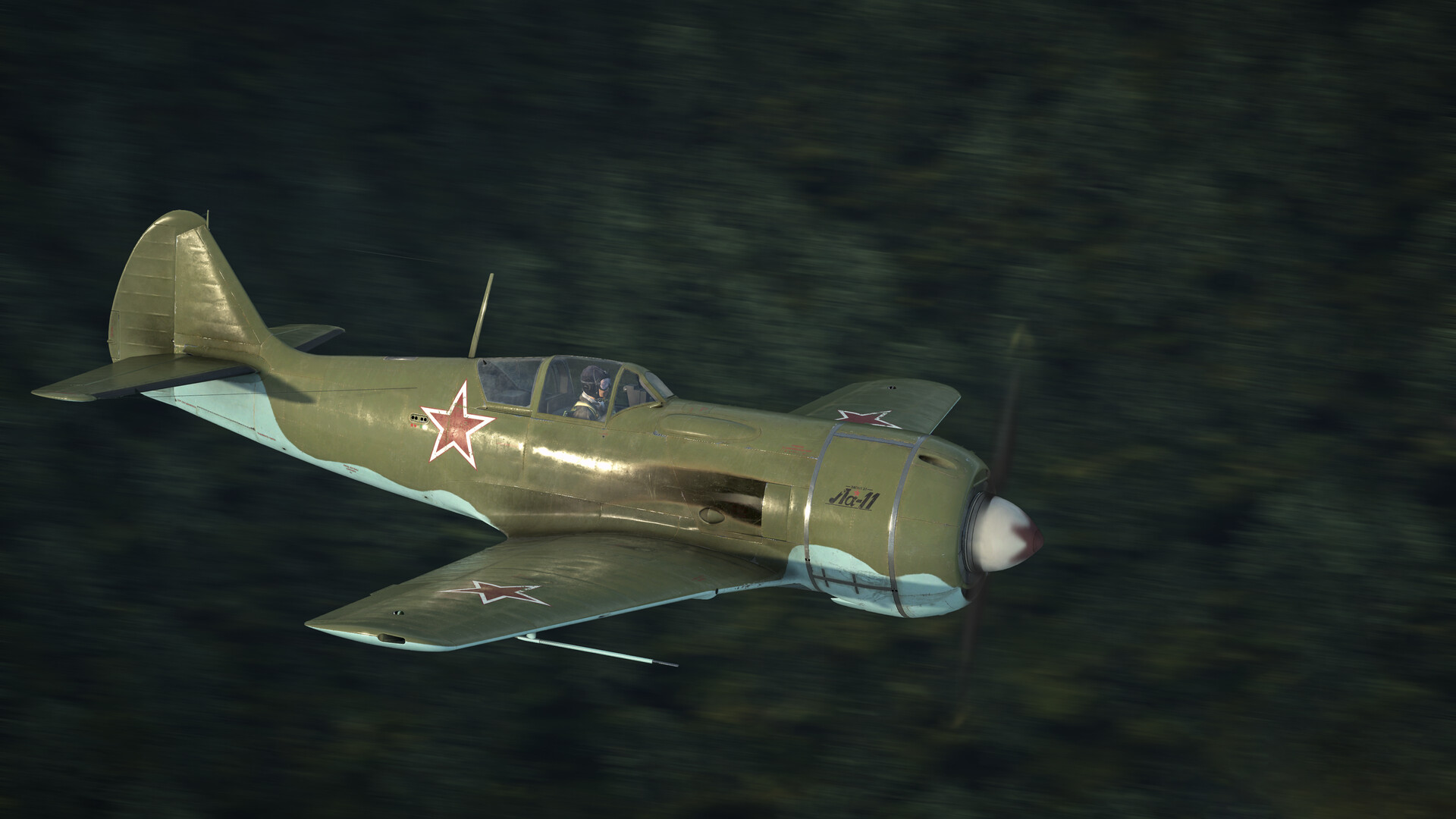


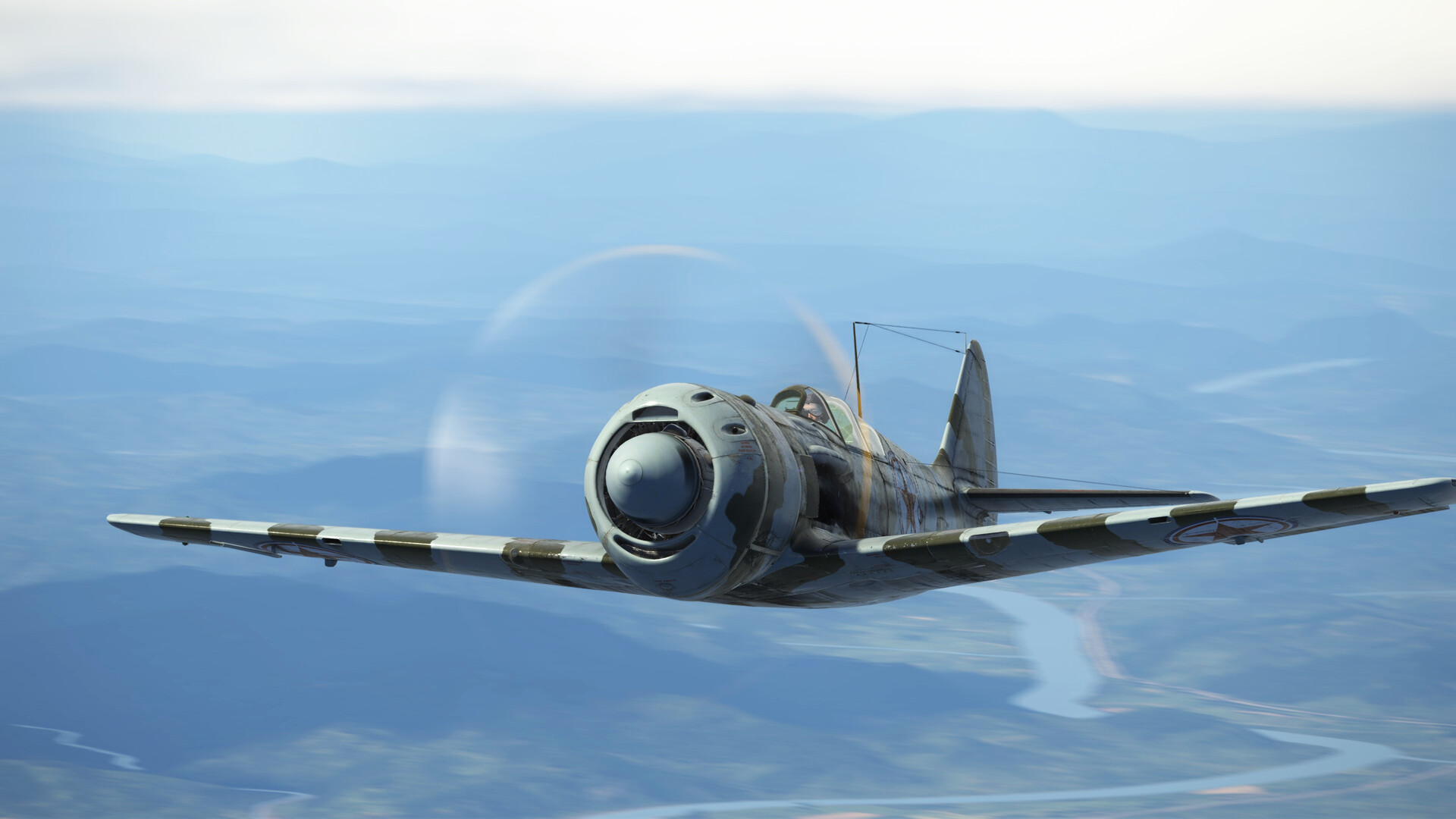


About Korea. IL2 Series: Lavochkin La-11 Collectors Plane
Development and production
The Soviet La-11 propeller-driven fighter was developed as a long-range escort fighter for the Tu-4 heavy bomber. It was designed at the Lavochkin Experimental Design Bureau on the basis of the post-war La-9 all-metal fighter in 1947. The prototype first flew in May 1947. It was built from 1947-1951 at Aircraft Plant No. 21 in Gorky; a total of 1,232 were produced.
Service
The first aircraft entered service with the 176th Guards Fighter Aviation Regiment at Teply Stan airfield. Despite some deterioration in performance compared to the La-9 due to the increase in takeoff weight due to a larger fuel supply and the transfer of the oil cooler to the engine cowling below the engine, the aircraft easily passed military tests. It was decided to use it as a long-range fighter in the Air Force, Naval Aviation, and the country's air defense. La-11s actively participated in interceptions and air battles with border violators from 1950-1952. The aircraft remained in service until 1955, when the last La-9s and La-11s were decommissioned. In addition to the Air Force, Naval Air Force, and USSR Air Defense, La-11s were supplied to China. A total of 223 La-11s had been supplied to China by the beginning of 1950. In 1950, Soviet pilots flew La-11s to China to help defend Shanghai and its environs from air raids. In China, the La-11 remained in service until 1959. A regiment of 36 aircraft from the Chinese Air Force took part in the Korean War. On November 30, 1952, in an air battle over Dundao Island, 16 La-11s fought against 30 F-86s and shot down, according to Chinese data, 4 aircraft, losing 3 of their own and 4 bombers escorted by them. The Americans admitted the loss of two Sabres and damage to another.
The La-11 was not supplied to the North Korean Air Force. In addition to the Chinese, Soviet La-11s, used as night fighters, also took part in the Korean War. Pilots of the 351st Fighter Aviation Regiment shot down 4 B-26 bombers and damaged 2 B-29s.
In general, the La-11, piloted by trained pilots, performed well in air battles in Korea.
Design Features and Armament
Structurally, the La-11 is an all-metal monoplane with a low-mounted laminar wing. The landing gear is cantilever, retractable, two-strut, with a retractable tailwheel. The landing flaps are mounted on the wings. The tail unit is all-metal, single-fin, cantilever.
The cockpit is located immediately behind the engine. The canopy is teardrop-shaped, without a fairing, with front and rear armored glass installed. The pilot's seat is equipped with a wide, soft backrest and armrests, as well as a urinal. The back of the seat was armored, and there was oxygen equipment.
The power plant consists of an ASh-82FN air-cooled engine designed by A.D. Shvetsov, installed in the nose of the aircraft on a motor frame, which drives a VISh-105V4 all-metal variable-pitch propeller. The air intake of the oil radiator on the La-11, unlike the La-9, is located under the engine, which allowed the fighter to be used in the Arctic and the Far North. The engine is started with compressed air from an onboard or airfield cylinder. The fuel system includes five fuel tanks with a total capacity of 1100 liters, including 1 rigid welded tank and 4 soft tanks. As the fuel is used up, the tanks are filled with cooled and dried exhaust gases to prevent a fire in the event of a puncture.
The aircraft control system is mechanical. The elevator and ailerons are controlled rigidly, while the rudder and trimmers are controlled by cables.
The hydraulic system is used to release the landing gear and landing flaps. The pneumatic system, in addition to starting the engine, is used to brake the wheels, reload the guns, and release the landing gear in an emergency.
The aircraft had an anti-icing system. It included two BO-20 gasoline heaters for heating the leading edges of the wing consoles and an electric heating system for the stabilizer leading edge through conductive rubber.
The aircraft was equipped with radio equipment, including the RSI-6 radio set and the SC-ZM friend-or-foe radar identifier. Initially, the RPKO-10M radio compass was also installed. Later, it was replaced by the ARK-5 radio compass, which was part of the USP-48 blind landing system. In addition to the radio compass, the USP-48 included an RV-2 radio altimeter, an MRP-48 marker receiver, an EGDM-3 remote gyromagnetic compass, and an electric artificial horizon.
The aircraft's armament included three synchronized 23 mm NS-23S cannons. The cannons were located above the engine asymmetrically, one on the right and two on the left. The cannons were belt-fed. The ASP-1 collimator gyroscopic sight was installed under the cockpit canopy, while on later machines, instead of the ASP-1, it was possible to install a more advanced and compact ASP-3N gyroscopic sight.
Paint Schemes
"PLAAF". Chinese People's Liberation Army Air Force, 1950s.
"Night Camo". NKAF night camo, 1950s.
"Improvised Camo". NKAF improvised camo, 1950s.
"Soviet". Soviet Air Force.
"Soviet Green". Green (AGT-4) with gray (AGT-7) undersides, Soviet Air Force.
"Dark Red". 911th IAP, Uelkal, USSR, Summer 1949.